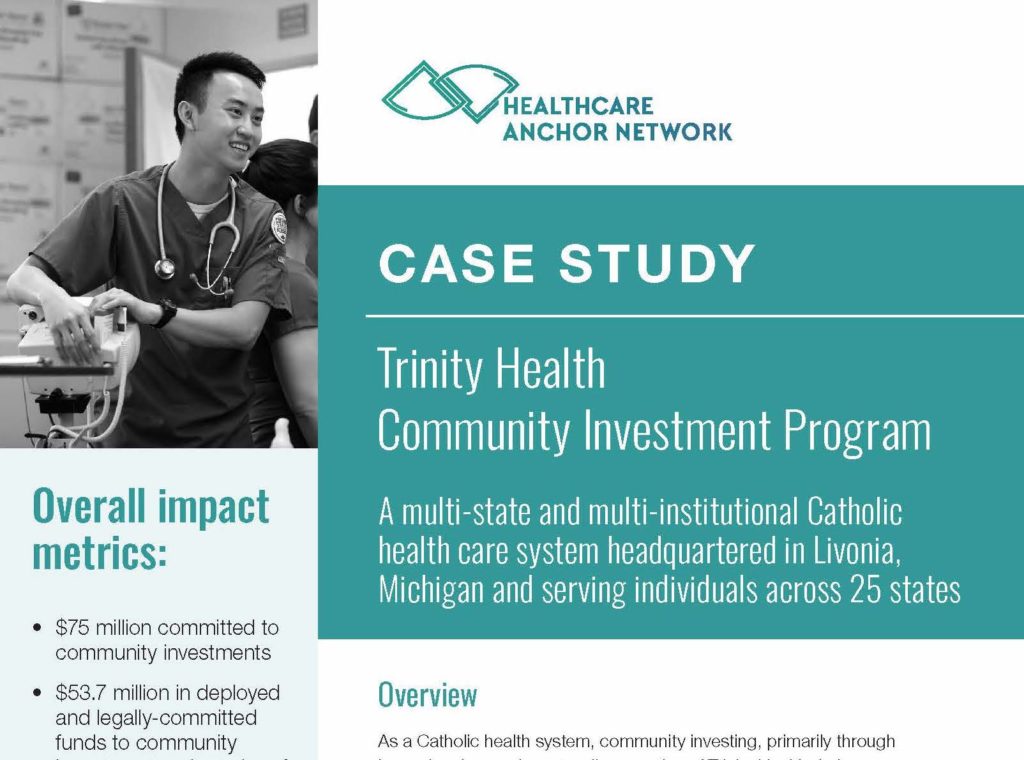

Trinity Health’s Community Investing Program is explored in a new case study. The case study covers the program’s history, design and implementation. The purpose of the program is to support projects, or loan pools, that will reduce social and economic disparities that cause unequal health outcomes for minority and low-income communities. These focus areas include but are not limited to: advancing access to higher education; fair and affordable housing; economic development and empowerment; and access to healthy, affordable food.
In 2019, Trinity Health signed onto the Healthcare Anchor Network (HAN) Place-Based Investing Commitment in which Trinity Health committed $75 million to place-based investments. As with other signatories, Trinity Health pledged to deploy the full allocation within five years.
HAN member Trinity Health’s Jaime Dirksen, President & CEO of Pittsburgh Mercy (former Trinity Health Vice President, Community Health & Well-Being), shares insights in this video on:
- The key principles that guide Trinity Health’s investment decisions and what the place-based investments mean to the health system’s community.
- How one impactful investment in Vista Village built affordable homes in Columbus, Ohio, helping individuals transition out of homelessness while offering supportive services.
- How Trinity Health measures and communicates impact of its place-based investments.