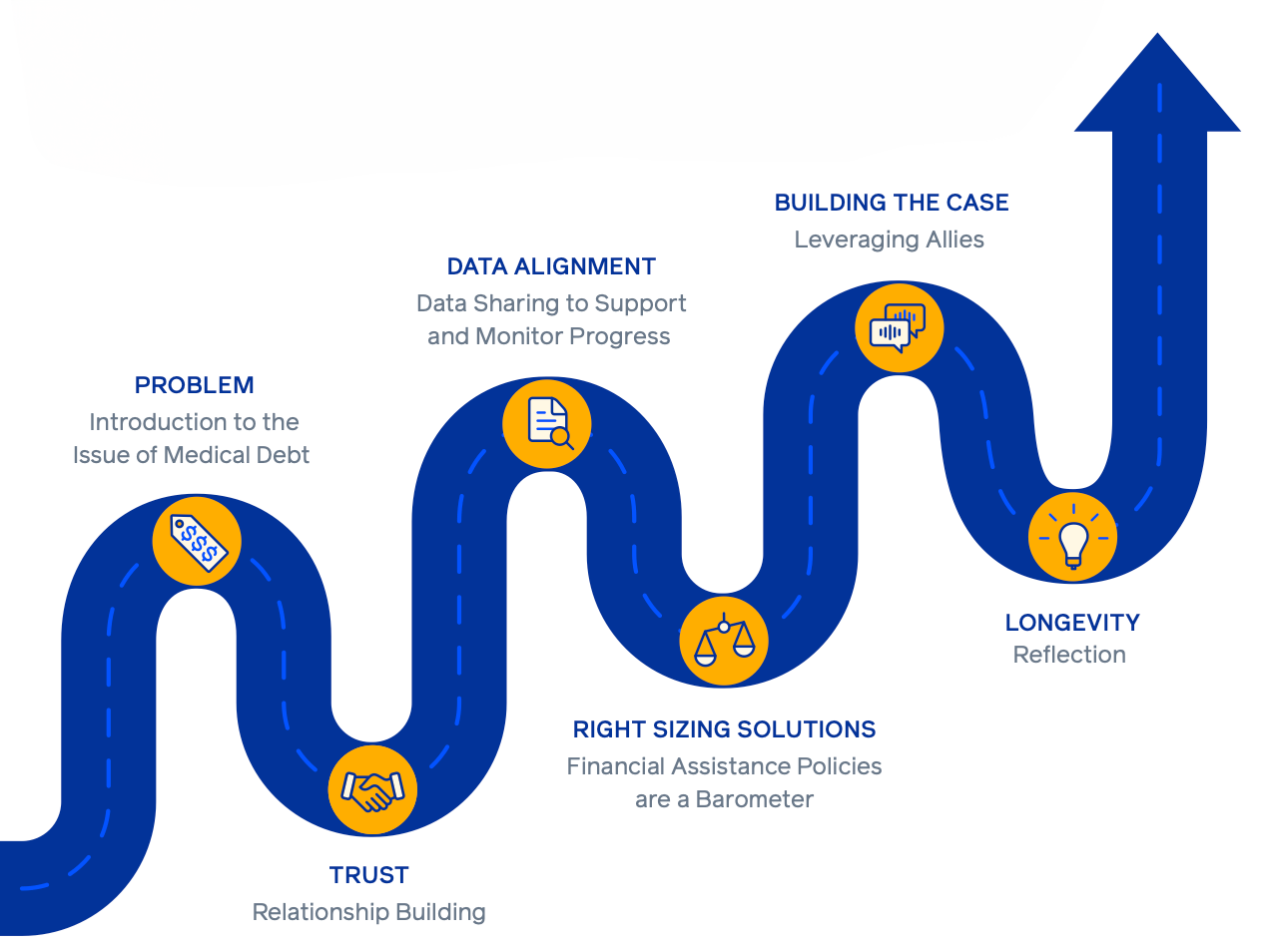
Over the last year Healthcare Anchor Network (HAN) and Undue Medical Debt collaborated to engage health system revenue cycle, community benefit and population health leaders to align strategies in helping patients avoid medical debt. Through the learning cohort, Mind the Gap: Connecting Community Benefit and Patient Billing, participants worked to forge new connections, better understand roles and data access and develop […]
Continue ReadingResources for the Anchor Mission
Kaiser Permanente Impact Purchasing Case Study
As one of the largest nonprofit health systems, Kaiser Permanente’s operations have tremendous economic influence. In 2023, Kaiser Permanente purchased over $22.2 billion in goods and services. An economic impact study estimates that these procurement dollars supported over 176,000 jobs, generated $11.8 billion in income, and contributed $3.4 billion in federal and state taxes. “If […]
Continue ReadingResources & Publications

Check out HAN’s Resources webpage where you can search for case studies, publications, fact sheets, and other resources by subject area. How LISC & Healthcare Anchor Network Members Are Promoting Community Resiliency: Economic Development details how LISC has partnered with 20 HAN members over the past seven years on initiatives that promote economic development and community resilience. Read all […]
Continue ReadingResources & Publications
Check out HAN’s Resources webpage where you can search for case studies, publications, fact sheets, and other resources by subject area. How LISC & Healthcare Anchor Network Members Are Promoting Community Resiliency: Economic Development details how LISC has partnered with 20 HAN members over the past seven years on initiatives that promote economic development and community resilience. AHA’s Foster […]
Continue ReadingProtected: HAN 2025 Convening Presentations

There is no excerpt because this is a protected post.
Continue ReadingHow LISC & Healthcare Anchor Network Members Are Promoting Community Resiliency: Economic Development

Healthcare Anchor Network (HAN) and the Local Initiatives Support Corporation (LISC) are dedicated to helping institutions leverage their financial resources to invest in key social drivers of health to create resilient local communities. Over the past seven years, LISC has partnered with 20 HAN members on initiatives that promote economic development and community resilience. HAN members have deployed $107 million through LISC, including $84 million in loans and $23 million in grants, to help finance affordable housing, small business lending, real estate development, local economic development strategies, and community wealth building. These efforts have impacted communities in 23 of LISC’s local markets.
Continue ReadingHow LISC & Healthcare Anchor Network Members Are Promoting Community Resiliency: Affordable Housing

Social and economic factors—including access to quality housing and jobs, and opportunities to start and grow a business—shape the health and well-being of communities. Healthcare Anchor Network (HAN) and the Local Initiatives Support Corporation (LISC) are dedicated to helping institutions leverage their financial resources to invest in these social drivers of health to create resilient communities. This is the first of a two-part series highlighting how HAN members are partnering with LISC to invest in affordable housing and economic development.
Continue ReadingIntermountain Health Place-based Investing Case Study

HAN just released a case study on HAN member Intermountain Health’s Place Based Investing program, a strategy embedded across six states: Utah, Idaho, Nevada, Colorado, Montana, and Wyoming. The program deploys low-cost, longer-term capital to address social drivers of health such as housing stability and financial wellness. By committing up to two percent of its […]
Continue ReadingExpanding Place-based Investing Cohort
Anchor Mission Communications Toolkit
Hospitals and health systems and other anchor institutions from across the country are adopting an “anchor mission” to tackle the underlying economic and social determinants of community health outcomes and community well being. But how can both the what and the why of this new transformative approach be effectively communicated, inside and outside your institution?
Continue Reading